

The Ultimate Mongolia Travel Guide. The most popular destinations

Updated: Jun 13
The Mongolian countryside is vast, distinct, and geographically diverse. The essential destinations outside of Ulaanbaatar are categorized below, contrasting the most popular, high-traffic highlights with untamed hidden gems that remain entirely off the beaten path.
🏜️ The South: Gobi Desert Region
The Gobi features a dramatic, otherworldly mix of rocky canyons, mineral-rich mud cliffs, and massive sand massifs.
Most Popular Highlights
Khongoryn Els (Singing Sands): Massive sand dunes stretching over 100 kilometers. They reach heights of up to 300 meters and emit a low drone or "singing" sound when winds shift the sand particles.
Bayanzag (Flaming Cliffs): Ochre-red sandstone canyons famous as the site where explorer Roy Chapman Andrews uncovered the world's first fossilized dinosaur egg nests in the 1920s. They glow fiery orange at sunset.
Yolyn Am (Vulture's Gorge): A narrow mountain gorge tucked deep within the Altai mountain foothills. The canyon walls drop so sharply that deep fields of river ice persist inside the gorge well into summer.
💎 Hidden Gems
Khermen Tsav: A remote red-rock canyon located deep in the western Gobi. It requires expert off-road navigation and multiple reserve fuel tanks to reach, offering an entirely empty, silent, canyon landscape.
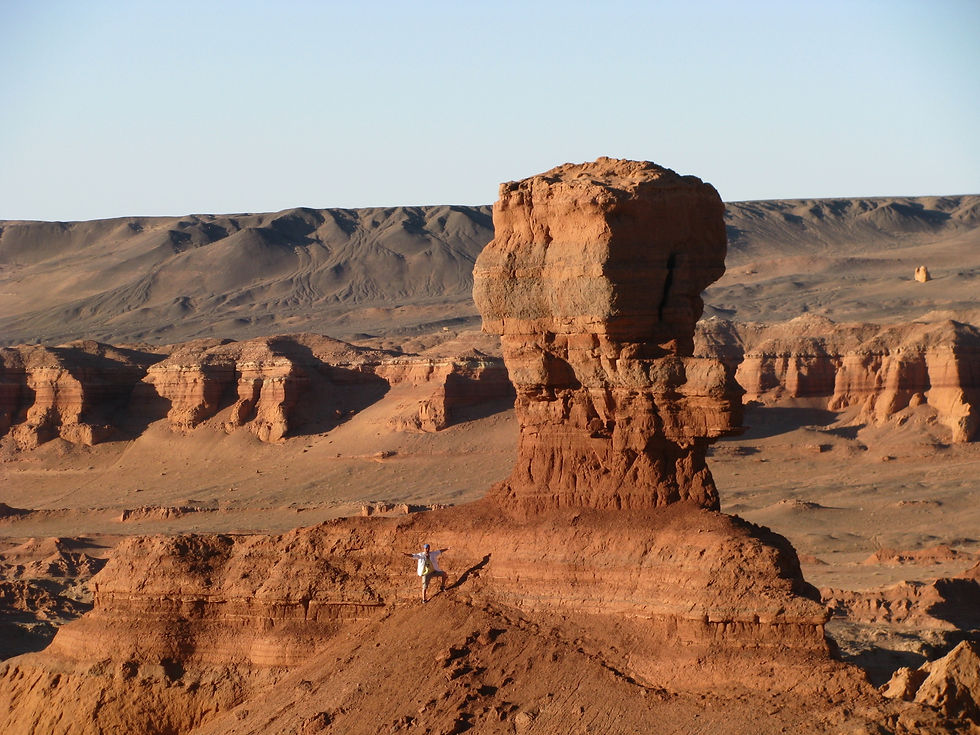
Bugiin Tsav: A vast, dry paleontological badland basin. Entire petrified trees and visible, unexcavated dinosaur bone fragments sit fully exposed on the desert floor.
Khamariin Khiid Energy Center: Located in the Eastern Gobi near Sainshand. Founded by the 19th-century Buddhist monk Danzanravjaa, this site is considered a global energy portal ("shambhala") surrounded by meditation caves.
🌿 The Center: Historic Heartland & Grasslands
The central steppe is home to rolling green pasturelands, river valleys and volcanic terrain.
Most Popular Highlights
Orkhon Valley & Waterfall: A UNESCO World Heritage landscape along the Orkhon River. It features historic tombs, sweeping steppes, and the Ulaan Tsutgalan waterfall tumbling over basalt rock layers.
Kharkhorin (Karakorum): The 13th-century capital of the Mongol Empire. It is home to the stunning Erdene Zuu Monastery, built from the stone ruins of Chinggis Khaan's city blocks.
Elsen Tasarkhai (Mini-Gobi): A unique strip of sand dunes slicing directly across lush pastures. It serves as an accessible desert stopover on central overlands.
Hustain Nuruu: This park is known for its successful reintroduction of the Przewalski's horse. Visitors can enjoy wildlife watching and beautiful steppe landscapes.
Tsenkher Hot Springs: A beautiful natural hot spring located in a picturesque setting, perfect for relaxation and enjoying the surrounding nature.
Terelj National Park: Located about 70 km from Ulaanbaatar, Terelj National Park is famous for its stunning landscapes, rock formations, and opportunities for outdoor activities such as hiking and horseback riding.
💎 Hidden Gems
Tuvkhun Hermitage Monastery. A historic meditation retreat hidden away on a forested cliffside in the Khangai Mountains. Reaching the temples requires a 4-kilometer uphill hike through pine woods.
A freshwater alpine lake formed by lava flows from the nearby Khorgo Volcanic Crater. Visitors can scale the rim of the extinct volcano and peer down into the core.
High-altitude alpine lakes interconnected by volcanic channels deep inside the mountains. This roadless park can only be traversed via foot or horse trek.
🌲 The North: Deep Lakes & Dense Forests.
The northern alpine region features taiga pine forests, cold-water rivers, and major lakes.
Most Popular Highlights
Burkhan Khaldun is the most sacred mountain in Mongolia. Located in Khentii Province within the Khan Khentii Strictly Protected Area, it stands at an elevation of 2,826 meters (9,272 feet) above sea level. In 2015, the mountain and its surrounding landscape were inscribed as a UNESCO World Heritage Site.
Deluun Boldog is universally celebrated as the birthplace of Chinggis Khaan (born as Temüjin in 1162). This highly revered, sacred site is located in Dadal Soum within Khentii Province, in northeastern Mongolia.
Lake Khuvsgul (The Blue Pearl): A massive, ancient freshwater glacial lake bordering Siberia. It contains roughly 1% of the world's liquid fresh water, surrounded by dramatic pine-covered ridges.
Amarbayasgalant Monastery: One of the largest architectural complexes in the country, tucked into a green valley north of Darkhan. It features intact Manchu-style architecture.
💎 Hidden Gems
The Deep Taiga (Tsaatan Settlement): The remote mountain homeland of the Tsaatan (Dukha) reindeer herders. Reaching their camps requires traveling past Hatgal and embarking on a multi-day horse trek through thick marshlands.
Khagiin Khar Lake: A pristine, deep-blue hidden lake isolated in the roadless wilderness of the Khan Khentii Protected Area. It is completely enclosed by dense pine forest.
Dayan Deerh Cave: A massive, multi-chambered sacred limestone cave system on the banks of the Tsagaan-Uur River, rich in ancient shamanistic mythology.
🦅 The West: Glaciers & Eagle Hunters
Western Mongolia is mountainous, rugged, and culturally distinct, dominated by Kazakh traditions.
Most Popular Highlights
The Mukhart River (Mukhartiin Gol): is one of Mongolia’s most visually striking natural wonders. It is located in Zavkhan Province within western Mongolia. This extraordinary river flows for approximately 20 kilometers (12.4 miles) along the edge of the massive Bor Khyar Sand Dunes.
Ulaagchiin Khar Nuur (often called Ulaagchin Black Lake) is one of Mongolia’s most spectacular hidden gems. Located in Zavkhan Province, it is celebrated for its breathtaking, high-contrast landscape where massive golden sand dunes dive straight into crystal-clear, emerald-blue alpine waters.
Altai Tavan Bogd National Park: The home of Mongolia's highest peaks, including Mt. Khuiten. It is famous for massive glaciers, jagged granite ridges, and golden eagle hunting traditions.
Khoton and Khurgan Lakes: Interconnected alpine lakes backed directly by the snow-capped Altai Mountains, serving as summer pastures for local nomads.
Khetsuu Khad (meaning "Difficult Cliff" or "Hard Rock") is the crown jewel and main geographical attraction of Khyargas Lake. Stretching over 5 to 7 kilometers along the lake's eastern shore, it is a dramatic geological formation that sits mostly underwater, with jagged, stark white limestone peaks protruding up to 20 meters above the water’s surface.
Because of the striking white cliffs contrasting against deep blue saltwater, international travelers often note that the area looks more like the Mediterranean coast or Greece than what you would typically expect to find in landlocked Mongolia
💎 Hidden Gems
Tsambagarav National Park: A snow-capped holy mountain massif standing on the border of Khovd and Bayan-Olgii provinces. The valleys below host isolated ethnic minorities like the Uriankhai people.
Achit Nuur: A sprawling, shallow lake bordering Uvs province that remains completely untouched by major tourist ger camps, offering premier seasonal birdwatching.


Comments