

Wild Mongolia's Food Guide

For centuries, the warriors of the Great Mongol Empire conquered continents on a diet powered by just two elements: meat and milk. But do not confuse this with the industrially farm-raised food of the modern world.
When you journey into the wilderness with Wild Mongolia Tours, you do not just travel—you reconnect with the earth. Mongolian traditional food is the ultimate primal fuel. It is entirely eco-natural, unmasked by heavy spices, brimming with wild vitamins, and anchored in a strict zero-waste philosophy.
This is the true, unadulterated taste of freedom. Here is why the nomadic diet remains one of the purest, highest-energy food traditions on the planet.
🌱 1. Beyond Organic: The Free-Roaming Miracle
In Mongolia, livestock do not live behind fences, nor do they see the inside of a barn. Horses, sheep, goats, cattle, and camels roam completely free across thousands of miles of untouched, pristine steppes.
The Wild Flora Advantage: Animals forage naturally on over 200 species of wild, pesticide-free grasses, wild onions, and medicinal mountain herbs.
Nutrient-Dense Proteins: Because the herds travel miles daily, their meat is lean, clean, and extraordinarily dense in iron, B vitamins, and natural Omega-3 fatty acids.
Pure, Raw Living Dairy: This untamed diet transforms pasture milk into a vitamin-packed superfood, completely free from artificial hormones, steroids, or antibiotics.

🥩 2. The True Taste: No Spices, No Disguises
If you are accustomed to processed foods masked by heavy marinades, hot peppers, or complex commercial spice blends, authentic Mongolian food will be a revelation. Traditional steppe cooking relies almost entirely on just two flavor enhancers: salt and time.
Nomads believe high-quality meat should taste like the land it came from. The flavors are rich, deep, and wild. Cooking methods like boiling or steaming lock in natural juices and clean fats, offering an authentic taste of nature that has remained unchanged since the era of Chinggis Khaan.
🥛 3. High-Vitamin "White Foods" (The Nomadic Superfoods)
To survive brutal winters that plummet to -40°C, Mongolian nomads rely on Tsagaan Idee (White Foods). These raw, naturally fermented dairy products are metabolic powerhouses:
Aaruul (Sun-Dried Curds): Left to dry on the rooftops of gers under the intense Mongolian sun, aaruul is a portable, rock-hard snack. It is exceptionally high in calcium, preserves teeth, and delivers a massive punch of organic protein to travelers and herders alike.
Airag (Fermented Mare’s Milk): This tangy, effervescent beverage is a living probiotic. Rich in Vitamin C, amino acids, and active enzymes, it has kept the immune systems of steppe warriors invincible for millennia.
🔥 4. Zero Waste, Maximum Kinetic Energy
The nomadic lifestyle deeply honors the animal by ensuring absolutely nothing goes to waste. Every single part of the livestock is utilized for survival, warmth, and nutrition.
Borts (Air-Dried Warrior Rations): Created by hanging strips of meat in the freezing winter wind, borts dehydrates completely while retaining 100% of its nutritional value. A single handful can be ground into powder and boiled into a calorie-dense broth capable of sustaining a warrior for a full day's ride.
Chanasan Makh (Boiled Meat on the Bone): Slices of fresh meat and nutrient-rich organ meats are boiled simply in water. The natural fat is highly prized as a clean, slow-burning fuel source that keeps the body warm and energized in harsh environments.

🗺️ Fuel Your Next Great Adventure
To eat like a Mongolian nomad is to strip away the artificial processing of the modern world and return to high-vitality sustenance. It is food born from the wind, the wild grass, and the endless blue sky.
Are you ready to fuel your soul with the diet of khaans?
Ancestral Cooking Techniques: Harnessing Fire, Water, and Stones
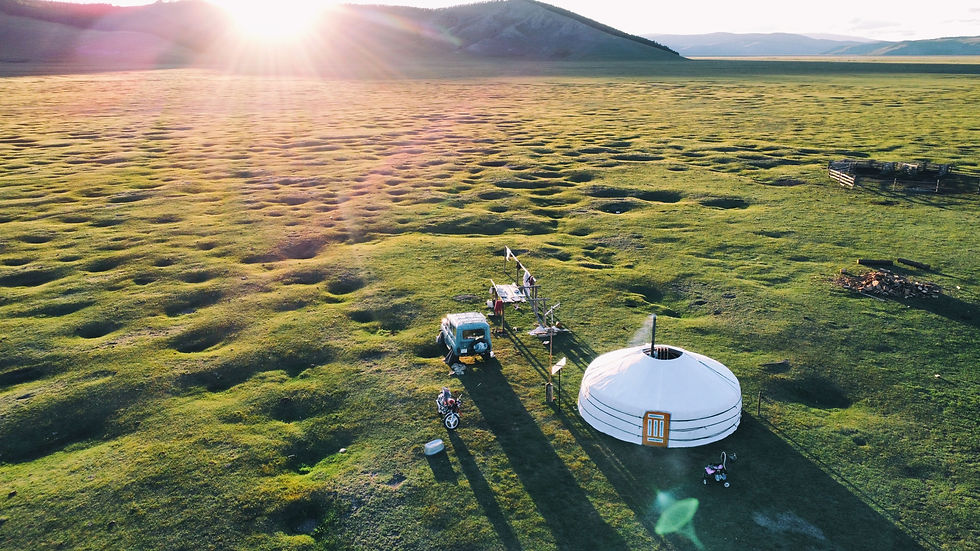
Mongolian nomadic cooking techniques are brilliant exercises in efficiency. Designed to be done inside a portable ger (yurt) using minimal utensils, these methods preserve nutrients, tenderize wild meats, and maximize energy output.
Khorkhog (The Hot Stone Barbecue): This is a legendary cooking method where smooth, river stones are heated directly in an open fire until glowing hot. The blazing stones are then layered inside a tightly sealed container—traditionally a metal milk jug—along with large chunks of bone-in mutton or goat and a splash of water. The intense heat of the stones pressure-cooks the meat from the inside out, creating an incredibly tender texture and a rich, concentrated broth.
Boodog (Cooking from the Inside Out): The ultimate wilderness survival technique. Instead of using a pot, the carcass of a goat or marmot acts as the cooking vessel. The animal is deboned through the neck, and red-hot river stones are stuffed directly into the cavity along with wild onions. The neck is tied shut, and the animal cooks from the inside while the fur is singed off the outside over an open fire, locking in every drop of nutrient-rich fat and juice.
Steaming (Jigneh): Steaming is heavily relied upon to cook delicate dough and meat combinations. It allows the natural fats of free-roaming livestock to melt beautifully into the food without escaping into boiling water.
🍽️ The Most Beloved Dishes: Names and Lore
When travelers visit Mongolia, these are the iconic, highly prized dishes that define steppe hospitality. They are packed with protein, clean calories, and pure flavor.
What it is: The undisputed king of Mongolian comfort food. These are pockets of thick, unbleached dough generously stuffed with minced, fatty mutton or beef, seasoned only with salt and wild leeks or onions.
The Experience: Eating buuz is an art. You bite a small hole into the dough first to sip out the piping hot, intensely flavorful natural meat broth gathered inside before eating the rest. It is a massive source of instant energy.
🥐 Khushuur (Fried Meat Pastries)
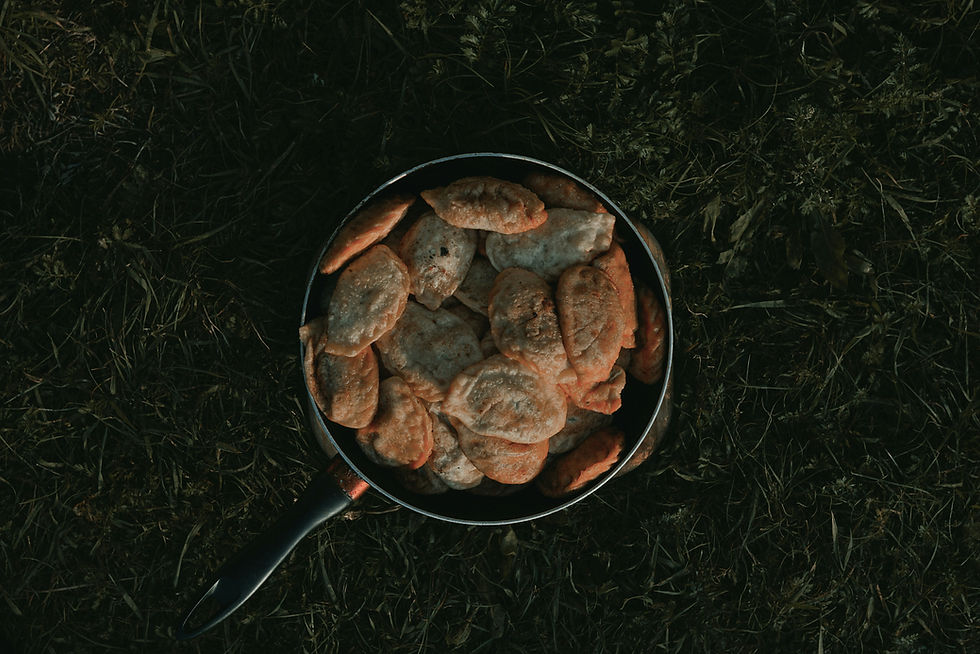
What it is: Similar in filling to buuz, but the meat is folded into a flat, crescent-shaped pocket of dough and deep-fried in clean animal tallow or oil until golden and crispy.
The Experience: Khushuur is the ultimate street and festival food, famously eaten during the mid-summer Naadam festival. Holding the hot pastry is said to stimulate nerve endings in the fingers, promoting blood circulation and vitality.
🍜 Tsuivan (Stir-Fried Hand-Pulled Noodles)
What it is: The absolute favorite everyday meal for locals and herders. It consists of fresh, hand-rolled dough cut into thick strips, which are first steamed and then stir-fried together with strips of wild-grazed mutton, rich animal fat, and occasional root vegetables
The Experience: Tsuivan is pure fuel. It is incredibly dense, heavy, and satisfying—designed to sustain hours of intense horse riding, herding, or trekking across the plains without a drop of artificial ingredients.
🍲 Guriltai Shöl (Meat and Noodle Soup)
What it is: A deeply comforting, authentic soup made by boiling fatty mutton bones to create a thick, cloudy, nutrient-dense broth. Hand-cut noodles and strips of meat are added to finish the dish.
The Experience: Sour fried curds (aaruul) are often mixed straight into the broth to add a tangy sharpness. It is the go-to remedy for cold weather, instantly warming the body's core.


Comments