

Chasing the Great Khaan: A Journey Through Mongolia’s Ultimate Chinggis Khaan Historical Sites


For history enthusiasts and adventure travelers alike, stepping into Mongolia is like walking straight through the pages of The Secret History of the Mongols. Chinggis Khaan (born Temüjin) did not just conquer the known world; he left an indelible spiritual, legal, and historical footprint across the vast landscapes of his homeland.
If you are planning an epic overland pilgrimage to walk in the footsteps of the world's greatest emperor, expand your itinerary to include these essential cultural monuments, legendary assembly locations, and historic landmarks.
1. The Gateway: Chinggis Khaan Statue Complex (Tsonjin Boldog)
Every epic journey needs a starting point, and this is the most striking modern tribute to the Khan.
The History: Legend says this is the exact spot where a young Temüjin found a golden whip. In nomadic Mongolian culture, finding a whip is an ultimate omen of good fortune, destiny, and success, giving him the spiritual green light to begin uniting the fractured nomadic tribes.
What to See: A staggering 40-meter-tall stainless steel equestrian statue of Chinggis Khaan. You can take an elevator up through the horse’s chest and step out onto its head for a panoramic view of the Tuul River basin. Below the statue sits an archaeological museum, a traditional costume rental studio, and a portrait gallery of the Khan lineage.
Location & Travel Tips: Situated roughly 54 kilometers east of Ulaanbaatar. It is accessible via a smooth, paved road making it perfect for a day trip.
2. The Inner Sanctum: Chinggis Khaan National Museum (Ulaanbaatar)
Located right in the heart of downtown Ulaanbaatar, this state-of-the-art facility is the premier intellectual repository of the Mongol Empire.
The History: Opened recently to showcase the global lineage of Mongolian kings, this world-class cultural institution spans nine floors of breathtaking artifacts.
What to See: It houses over 8,300 objects ranging from the Xiongnu Empire to the late 20th century. The absolute highlight is the Chinggis Khaan Grand Hall of Honor on the 9th floor. It features a massive, majestic golden statue of the Great Khan beneath a ceiling structured like a traditional royal Mongolian ger.
Location & Travel Tips: Situated just a short walk north of Sukhbaatar Square. It is fully wheelchair accessible and perfect for an indoor history day before heading out to the countryside.
3. The Imperial Court: Kherlengiin Khodoo Aral & Avarga Ruins
Located along the sweeping bends of the Kherlen River, this flatland area is recognized by historians as the birthplace of the Mongol Empire’s administrative power.
The History: This historic valley was the home of Avarga Palace, the first nomadic capital and great base-camp palace of Chinggis Khaan. It served as a permanent staging ground for military campaigns. Most notably, it is the exact location where historians completed writing the legendary book The Secret History of the Mongols in 1240.
What to See: A massive stone monument erected in 1990 to honor the 750th anniversary of The Secret History. The front depicts Chinggis Khaan, flanked by reliefs of his cavalry and royal coat of arms. Nearby, active archaeological excavations highlight the foundations of the ancient city.
Location & Travel Tips: Located in Delgerkhaan Soum, Khentii Province. The drive consists of paved roads followed by rough steppe trails.
4. The Cradle of Parliament: Ikh Khuraldai & Great Yurt Complex
Tucked along the sacred Onon River basin, this location honors the democratic roots of the Mongol Empire.
The History: In 1206, the prominent chieftains of all united steppe tribes gathered here for the Ikh Khuraldai (Great Assembly). It was during this historic parliament that Temüjin was officially proclaimed "Chinggis Khaan"—the Universal Ruler of the Mongol Empire.
What to See: The centerpiece is a magnificent, white-and-silver royal palace structure designed to mimic a colossal nomadic palace yurt (Ger) towering 21 meters high. The interior features an echo chamber designed for ceremonies and holds the symbolic sacred flame of the Khan’s ancestral homeland.
Location & Travel Tips: Located in Binder Soum, Khentii Province. This site coordinates beautifully with an overland loop heading up to the Siberian border forests.
5. The Birthplace: Deluun Boldog (Dadal Soum)
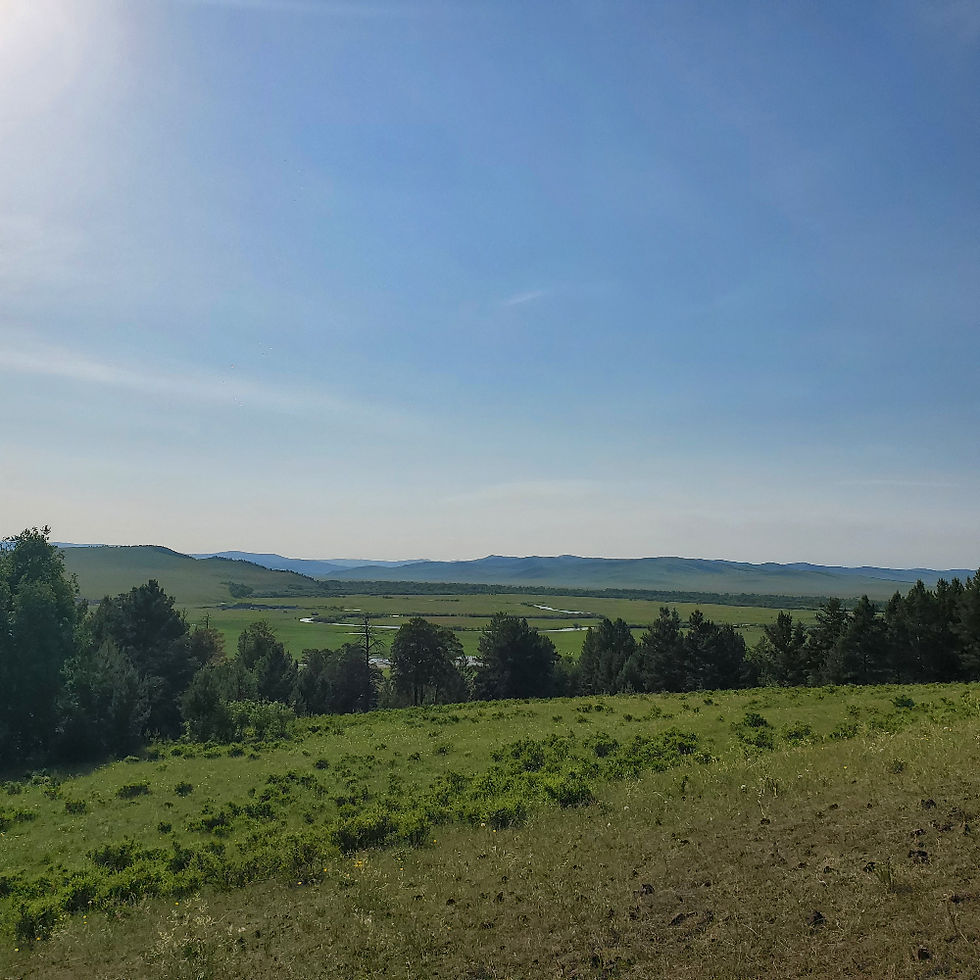
Deep in northeastern Khentii Province, where the vast grass steppes transition into the lush pine forests of the Siberian taiga, lies the actual birthplace of the emperor.
The History: Following extensive geological and historical research, Deluun Boldog was officially recognized as the exact birthplace of Temüjin in the year 1162.
What to See: A beautiful, sacred hill crowned with a 12-meter-tall white stone monument built in 1962 to honor the 800th anniversary of his birth. Just one kilometer west of the hill is Khajuu Bulag, a pristine freshwater forest spring where Temüjin’s family drank.
Location & Travel Tips: Located in Dadal Soum, Khentii Province, approximately 540 to 580 kilometers northeast of Ulaanbaatar. A 4x4 vehicle is strongly recommended due to muddy river basin tracks.
6. The Bond of Brotherhood: Tengeriin Andlal (Statue of the Friendship)
This striking, artistic architectural landmark stands proudly on the isolated eastern steppe.
The History: This monument stands in the exact geographical region where a young Temüjin first met Boorchi after his family’s eight palomino horses were stolen. Boorchi instantly volunteered to risk his life to help track them down, forming an unbreakable, lifelong bond of brotherhood (Andlal). Boorchi eventually rose to become the supreme commander of the Khan’s cavalry.
What to See: An avant-garde monument complex showcasing intertwined figures and symbols representing loyalty, destiny, and camaraderie. The secluded location offers zero light pollution, making it an incredible stop for sunset photography.
Location & Travel Tips: Located in Batnorov Soum, Khentii Province.
7. The Seat of Justice: Shikhikhutug - Ikh Zasag Law Complex
This impressive newly developed historical park is dedicated entirely to the legal foundation of the largest contiguous empire in world history.
The History: Shikhikhutug was an adopted son of Chinggis Khaan's family who grew up to become the Supreme Judge (Ikh Zargach) of the Mongol Empire. He was personally tasked by the Khan to write down the Ikh Zasag (The Great Yassa Law Code) on blue scrolls, creating a society governed strictly by a unified system of absolute law and order.
What to See: The architectural design is a vast "Land Art" project which, when viewed from the sky, forms the shape of a colossal green winged horse. The main complex houses a specialized legal museum, a historic research library, and an honorary courtroom hall.
Location & Travel Tips: Situated roughly 4.5 kilometers northeast of the town center of Norovlin Soum, Khentii Province, right along the scenic slopes of the Uran Dosh Mountains.
8. The Coronation: Khar Zurkhnii Khukh Nuur (Blue Lake of Black Heart)
This serene alpine lake is hidden away at the foot of the dramatic, sharp-peaked Khar Zurkh Mountain.
The History: In the year 1189, Temüjin successfully united the primary warring steppe tribes and was officially enthroned as the supreme ruler, taking the legendary title "Chinggis Khaan" (meaning universal leader).
What to See: On the southern shores of the freshwater lake stands a massive open-air wood-carving memorial complex. It features 36 intricately carved golden-lineage timber statues forming a protective crescent circle around depictions of Chinggis Khaan, his parents (Yesugei and Oulen), and his primary queen, Borte Ujin.
9. The Sacred Sanctuary: Burkhan Khaldun Mountain
Rising 2,362 meters into the sky within the Khan Khentii Strictly Protected Area, this crescent-shaped peak is the ultimate spiritual heart of Mongolia. It was designated a UNESCO World Heritage Site in 2015.
The History: In his youth, Temüjin hid in the thick taiga forests of this mountain to escape deadly Merkit raiders. Crediting the mountain with saving his life, he declared it a sovereign sacred peak to be permanently worshipped by his descendants. Legend heavily asserts that the mountain holds his secret, undiscovered final burial site.
Strict Rules: Out of respect for centuries-old Shamanic and Buddhist state traditions, women are strictly forbidden by law from climbing the mountain past the base shrine. Men are permitted to hike the grueling, muddy 5-kilometer trail up to the higher peaks.


Comments